.png)

CPW and Denver Zoo Reintroduce 3,500 Endangered Boreal Toad Tadpoles Near Leadville
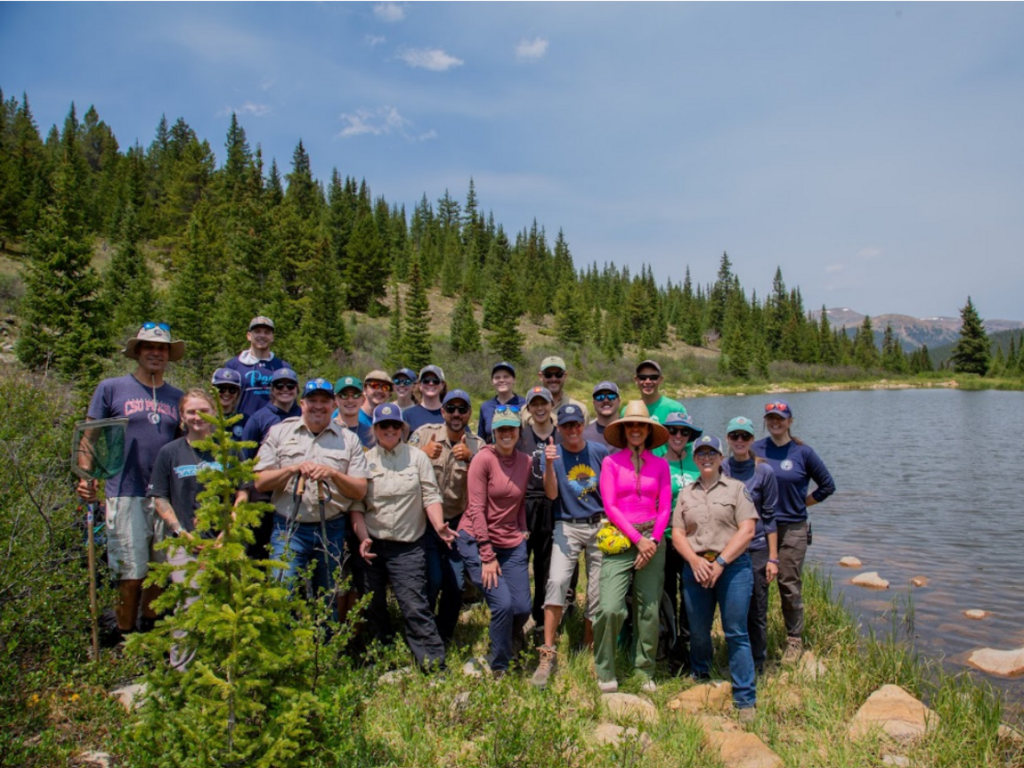
Description: Colorado Parks and Wildlife and Denver Zoo Conservation Alliance reintroduced 3,500 state-endangered boreal toad tadpoles into a historic alpine breeding site near Leadville to support recovery of Colorado’s only native alpine toad.
CPW and Denver Zoo Conservation Alliance reintroduce state endangered boreal toad tadpoles into historic alpine breeding site
DENVER — Colorado Parks and Wildlife (CPW) and Denver Zoo Conservation Alliance (DZCA) hiked into alpine wetlands near Leadville to translocate 3,500 boreal toad tadpoles and reintroduce them into a historic breeding site to help recover the native species in Colorado.
The boreal toad is the only native alpine toad in the Southern Rocky Mountains in Colorado and has experienced dramatic population declines in recent decades due to chytrid fungus (Batrachochytrium dendrobatidis). These declines led to the classification of boreal toads as a Tier 1 Species of Greatest Conservation Need (SGCN) in Colorado's State Wildlife Action Plan (SWAP), which guides the conservation of Colorado’s most vulnerable wildlife species and habitats.
CPW’s Boreal Toad Conservation Plan identifies several management actions necessary for species recovery to create a self-sustaining population of boreal toads, the most critical of which are translocations and reintroduction of tadpoles into suitable habitats. This important work simultaneously advances CPW’s 2026-2036 Strategic Plan, which seeks to support healthy wildlife populations and habitats.
“This continued conservation work is critical to protecting the biodiversity of our ecosystems. Many hours of fieldwork, habitat restoration, exploratory surveys, and proposal writing went into this project, and we’re excited to start the project off strong in its first year,” said CPW Native Aquatic Species Biologist Alex Jouney. "This work takes a village of people who care about recovering this sensitive species. Boreal toads could disappear in Colorado without all the proactive work our teams do every year. We're very grateful for our continued partnership with the wildlife professionals from Denver Zoo Conservation Alliance, and the Bureau of Land Management — without the cooperative work that we share and complete together, the mission would not be possible."
This translocation project has been meticulously planned over the last two years. The translocation stocking sites were selected by the Arkansas Basin Toad Conservation Team — an interagency panel of biologists led by CPW that is responsible for conservation of toads in the region. After months of surveying potential sites, the pond sites were selected for their ability to provide the highest-quality breeding habitat and support a self-sustaining population.
For over 30 years, CPW has devoted resources toward boreal toad research and continues to explore ways to recover the species. Specifically, CPW biologists focus on developing methodologies for reintroducing toads to historically occupied habitats, detecting and working to mitigate the effects of chytrid fungus in the wild, marking and identifying individual toads, and improving breeding success at CPW’s Native Aquatic Species Restoration Facility, which plays a critical role in the state’s efforts to restore boreal toad populations.
“This fieldwork is challenging and requires our biologists to hike miles uphill to alpine habitats with over 10 pounds of water containing over 100 tadpoles on their backs,” said CPW Director Laura Clellan. “I continue to be amazed by our staff and our partners who are dedicated to protecting our amphibian species for future generations. This release marks an attempt to repatriate boreal toads to habitat that they historically occupied, in other words, habitat that has proven success in sustaining boreal toad populations."
Post-stocking, the sites will be monitored by CPW native aquatic species biologists and technicians, including returning to the stocking sites to conduct follow-up visual surveys through late August. Stocking efforts will continue for five years, and annual monitoring of the sites will provide information on toads that successfully breed in the ponds and any potential spread of pathogens throughout the drainage.
Since 2021, CPW and the DZCA have partnered to support Colorado’s population of boreal toads. DZCA received adult toads from the John W. Mumma Native Aquatic Species Restoration Facility and has successfully reproduced and reared them every year at the Denver Zoo Conservation Alliance facility, enabling their release into the wild.
“This successful release effort was the result of a tremendous amount of hard work and planning by our Animal Care and Field Conservation teams, and our partners at Colorado Parks and Wildlife,” said Cristal Torres DeHerrera, President and CEO of Denver Zoo Conservation Alliance. “Our shared love of Colorado's native wildlife and wild places is what made this achievement possible, and it’s a strong example of field conservation work rooted in science, community and action. We’re committed to continuing this effort with CPW for many years to come and doing our part to make sure this important species remains part of Colorado’s ecosystem for future generations.”
Denver Zoo Conservation Alliance has been conserving endangered and critically endangered amphibian species for more than 18 years. In 2018, DZCA became the first zoo in the Northern Hemisphere to successfully breed critically endangered Lake Titicaca frogs, and has since provided more than 250 healthy frogs to zoos and aquariums in the U.S. and Europe. In 2021, the organization successfully bred critically endangered Panamanian golden frogs as part of the Association of Zoos and Aquarium’s Species Survival Plan.
To learn more about boreal toad research in Colorado, visit cpw.state.co.us/species/boreal-toad or watch the video Saving Colorado’s Boreal Toads. To learn more about Denver Zoo Conservation Alliance projects, visit denverzoo.org/field-conservation/
ABOUT COLORADO PARKS AND WILDLIFE
CPW is an enterprise agency, relying primarily on license sales, state parks fees and registration fees to support its operations, including: 43 state parks and more than 350 wildlife areas covering approximately 900,000 acres, management of fishing and hunting, wildlife watching, camping, motorized and non-motorized trails, boating and outdoor education. CPW's work contributes approximately $6 billion in total economic impact annually throughout Colorado.
ABOUT DENVER ZOO CONSERVATION ALLIANCE
Home to more than 2,500 animals representing 450 species, Denver Zoo Conservation Alliance (DZCA) is a global nonprofit wildlife conservation organization that inspires and empowers communities to save wildlife and wild places. DZCA connects people to the wonders of nature through well-cared-for animals in immersive habitats, engaging learning experiences and impactful conservation programs in Colorado and worldwide. Accredited by the Association of Zoos and Aquariums (AZA) and American Humane Certified™, DZCA pursues its mission—Inspiring Communities to Save Wildlife for Future Generations—through the support of its guests, members, donors and partners that create a collaborative alliance dedicated to saving wildlife together. For more information, visit DenverZoo.org.
Colorado Parks and Wildlife (CPW) is an enterprise agency, relying primarily on license sales, state parks fees and registration fees to support its operations, including: 43 state parks and more than 350 wildlife areas covering approximately 900,000 acres, management of fishing and hunting, wildlife watching, camping, motorized and non-motorized trails, boating and outdoor education. CPW's work contributes approximately $6 billion in total economic impact annually throughout Colorado.